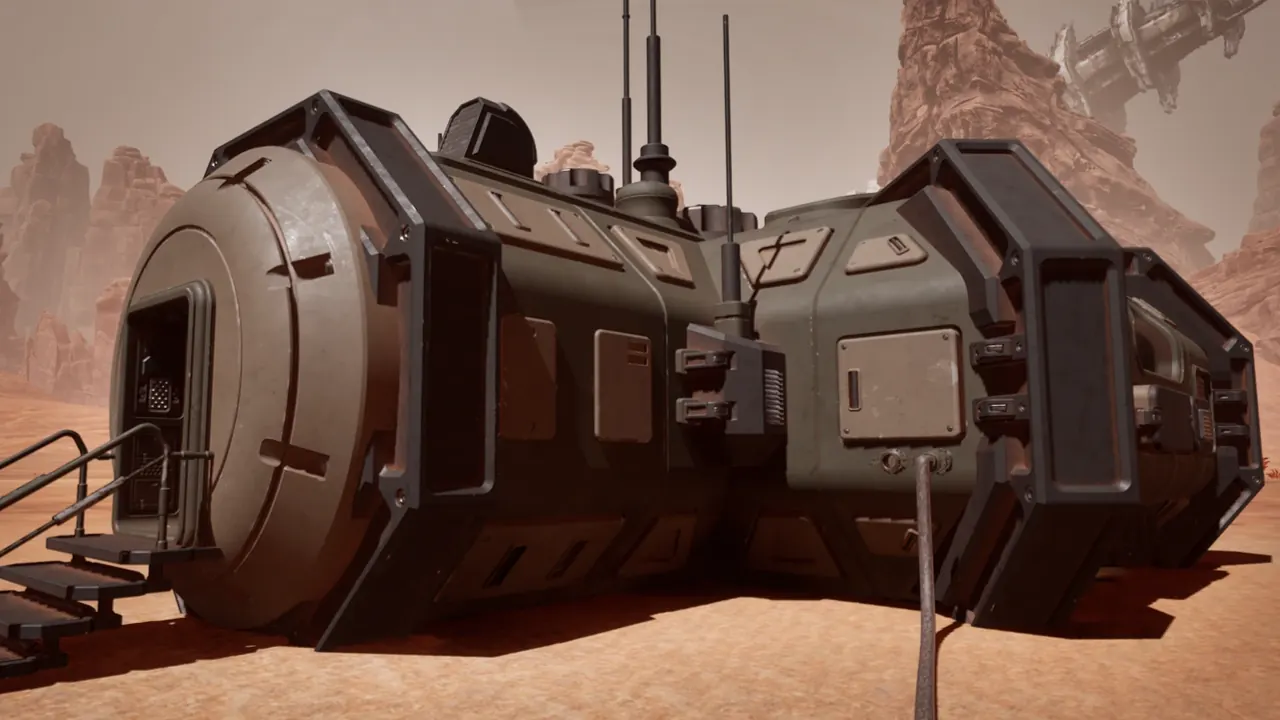
In AURORA, a base should not appear as a fully furnished home from the start. It is a place the player gradually builds in an unfamiliar desert. One of the important steps in development, therefore, is not simply modeling a habitat, but connecting it to doors, an airlock, and physical engineering systems.
This entry shows what is already visible in the game. The images come from the current Unreal Engine development scene. The interface was removed by cropping the original captures; no new structures or imagined rooms have been added to these pictures.
Building the habitat itself
The habitat already has a distinct silhouette: a substantial outer shell, reinforced sections, an entrance with steps, technical panels, and connection points for external equipment. I am aiming for AURORA's grounded industrial retro-futurism: metal, practical mechanisms, serviceable details, and signs of use rather than decorative science-fiction technology.
Appearance matters, but it is not enough in a survival game. A habitat should feel like part of a life-support infrastructure, not an isolated prop. That becomes especially important at the entrance.
Airlock and doors
An airlock separates the outside environment from the living space. The game already has interactive doors, an interior airlock chamber, and a system-status display. The screen presents readings for the interior and exterior conditions, together with the state of the passages.
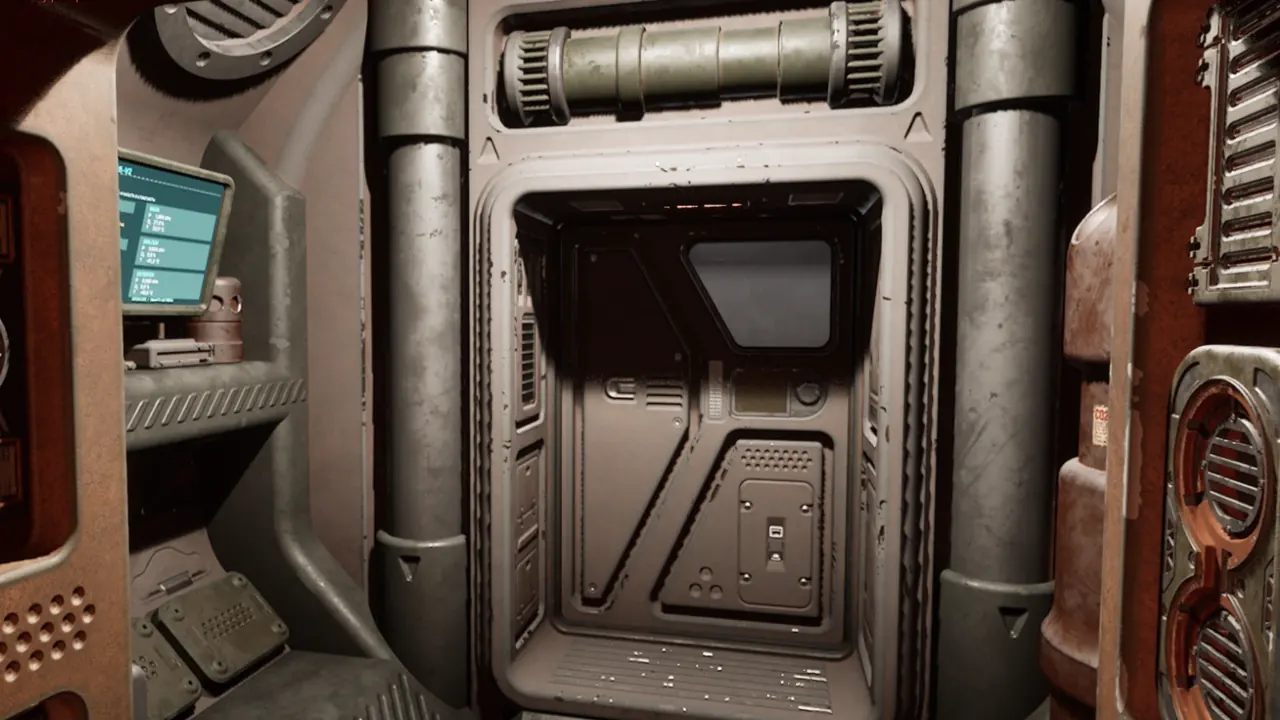
This area involves more than modeling. There are rules to define: when a door may open, which conditions must be checked, and how those checks should be communicated clearly to the player. I am still refining this part of the project, so I am not presenting the entire pressurization system as finished.
Cables, hoses, and physical connections
Another important part of the project is engineering infrastructure. I want power and equipment connections to exist as more than abstract menu options. Buildings need actual ports that can be connected using flexible cables and hoses.
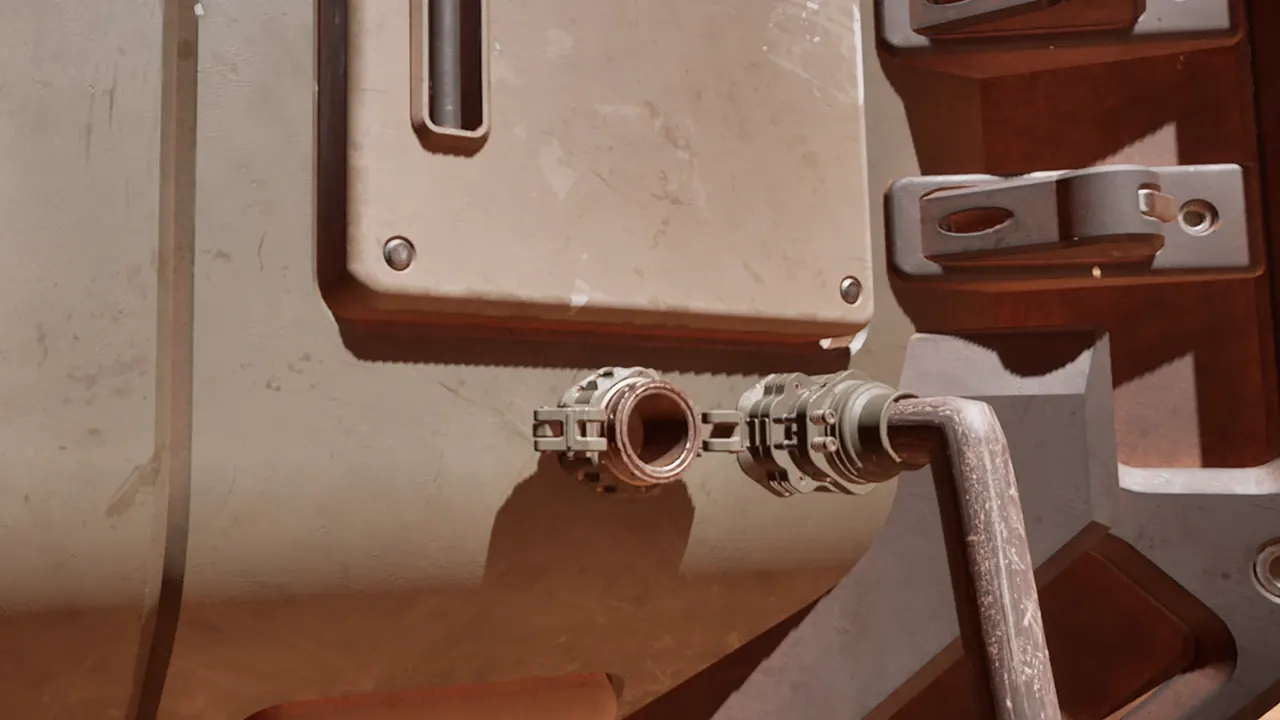
The image shows a small but telling detail: a pair of external fittings and a connected flexible line. Physical interfaces like these make a system easier to understand. You can see where something connects rather than having to imagine an invisible network. The connections are still being developed and tested as part of the wider base infrastructure.
From one habitat to an industrial outpost
At the same time, I am creating separate production and technical structures. My aim is to give them the weight and complexity of equipment that needs to be operated and maintained in a harsh environment.
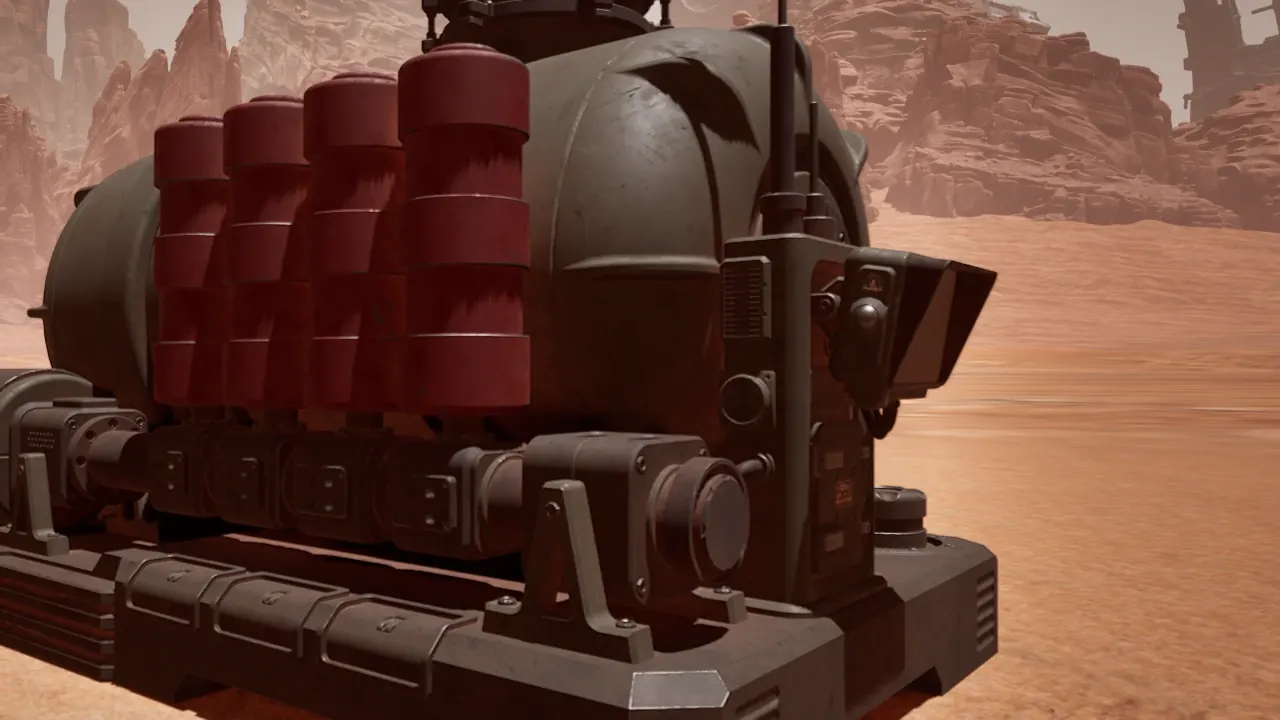
This image shows one such unit, with a cylindrical shell, external assemblies, pipe connections, and a supporting frame. I am presenting it as a 3D model already placed in the game—not claiming that every production process associated with it is complete.
What still needs work
The main room inside the habitat is currently quite sparse. Furnishings, practical work areas, and the details that make a shelter feel lived-in still need attention. I am also continuing to test door interaction, engineering connections, and how the related systems behave together in the game.
I would rather show this stage openly than pretend the base is finished. AURORA already has the shelter structure, an airlock, doors, and early physical connections. The next challenge is making these separate elements work together as a convincing place to live and work on an unfamiliar planet.
This is a development journal. The images document real work in progress rather than a complete feature list—and that is precisely how AURORA is being built, one working piece at a time.